Why Restaurant Caesar Salad Tastes Better Than Yours
I spent years wondering why my homemade Caesar salad never tasted like the one at my favorite restaurant. Same lettuce, same cheese, same bottled dressing, and somehow mine tasted flat while theirs tasted electric. The answer turned out to be simple: restaurants are not using bottled dressing, and they treat every component with intention. None of their secrets require culinary school or special equipment. Once I learned the handful of things professional kitchens do differently, my Caesar caught up in one weekend. Let me show you exactly where the gap is and how to close it.
Why Restaurant Caesar Salad Dressing Tastes Better
The dressing is where the restaurant version wins the fight before it starts. Bottled Caesar dressing is built to survive months on a shelf, and shelf life is the enemy of bold flavor. Restaurant dressing is made fresh, often daily, from ingredients that would never survive in a bottle. It costs pennies more and takes ten minutes. This is the single biggest upgrade you can make at home.
Anchovies Make Restaurant Caesar Salad Dressing Better
Anchovies are the ingredient home cooks skip and restaurants never do. Those little fillets do not make the dressing taste fishy; they make it taste savory, deep, and impossible to stop eating. That quality is umami, the same satisfying depth you get from parmesan and Worcestershire sauce. A Caesar without anchovies is missing its backbone.
Start with two or three fillets mashed into a paste with the flat of your knife. The paste dissolves completely into the dressing, leaving flavor with no trace of texture. Anchovy paste from a tube works too; a teaspoon equals about two fillets. Keep the tube in the fridge and it lasts for months.
Worcestershire sauce is the polite cousin if you truly cannot face the fillets. It contains anchovies already, which is why it appears in classic Caesar recipes. A few dashes add some of that depth, though the real thing gives you more. Try the fillets once before you decide they are not for you.
Fresh Garlic and Lemon Make Restaurant Caesar Salad Dressing Better
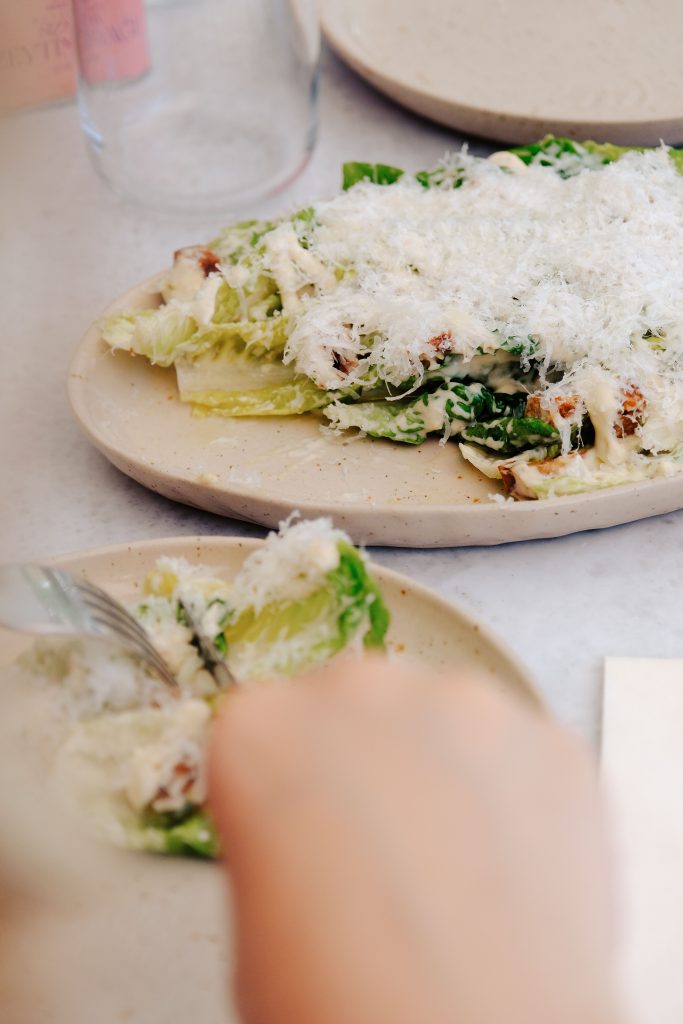
Bottled dressing relies on garlic powder and citric acid, and your tongue can tell. Fresh garlic brings heat and perfume that powder lost long ago. One clove, grated or mashed to a paste with a pinch of salt, is enough for a whole batch. Raw garlic is potent, so resist the urge to add three.
Fresh lemon juice does the work that vinegar concentrate cannot. It brightens the richness and makes the whole dressing taste alive. Squeeze it fresh; the bottled stuff tastes cooked and dull by comparison. One lemon usually gives you all the juice a batch needs.
Balance is the skill restaurants practice daily. Taste your dressing and ask what it needs: more lemon if it feels heavy, more parmesan if it feels sharp. Adjust in small steps and taste after each one. Your tongue is the only tool required.
Real Egg and Olive Oil Make Restaurant Caesar Salad Dressing Better
Classic Caesar dressing is an emulsion built on egg yolk, the same principle as mayonnaise. The yolk binds oil and lemon juice into a creamy dressing that clings to every leaf. Bottled versions fake that texture with gums and stabilizers. You can taste the difference in the first bite.
If raw yolk worries you, use a coddled egg or simply start with good mayonnaise. Two tablespoons of mayo give you a stable, creamy base with zero drama. Whisk in the anchovy, garlic, lemon, and cheese, and thin with a little water. This shortcut version is what many restaurants actually use.
Drizzle the oil in slowly while whisking, and the dressing thickens like magic. Use a mild olive oil rather than a bitter, peppery one; assertive oil can overwhelm the balance. The whole process takes five minutes in a bowl. Click here for my step-by-step homemade Caesar dressing recipe if you want exact measurements.
Why Restaurant Caesar Salad Lettuce and Croutons Taste Better
Dressing gets the glory, but texture is the other half of the restaurant secret. Cold, crisp lettuce and genuinely crunchy croutons make every forkful interesting. Home Caesars usually fail here quietly: limp leaves, stale cubes from a bag, cheese dust from a can. Restaurants treat these components as seriously as the dressing. A few small habits close the gap completely.
Cold Crisp Romaine Makes Restaurant Caesar Salad Better
Restaurants serve Caesar salad genuinely cold, and temperature changes everything. Cold romaine is crisp, sweet, and snappy; room temperature romaine bends instead of crunching. Wash your lettuce, dry it completely, and chill it in the fridge for at least thirty minutes before assembly. Some kitchens even chill the serving plates.
Drying matters as much as chilling. Water on the leaves dilutes the dressing and stops it from clinging. A salad spinner is the fastest route, followed by a few minutes on a clean kitchen towel. Wet lettuce is why your dressing slides to the bottom of the bowl.
Tear or chop the romaine into big, fork-sized pieces and keep the crisp inner ribs. Those pale hearts carry the crunch the salad is famous for. Save the dark floppy outer leaves for another use. The heart of the romaine is the heart of the Caesar.
Homemade Croutons Make Restaurant Caesar Salad Better
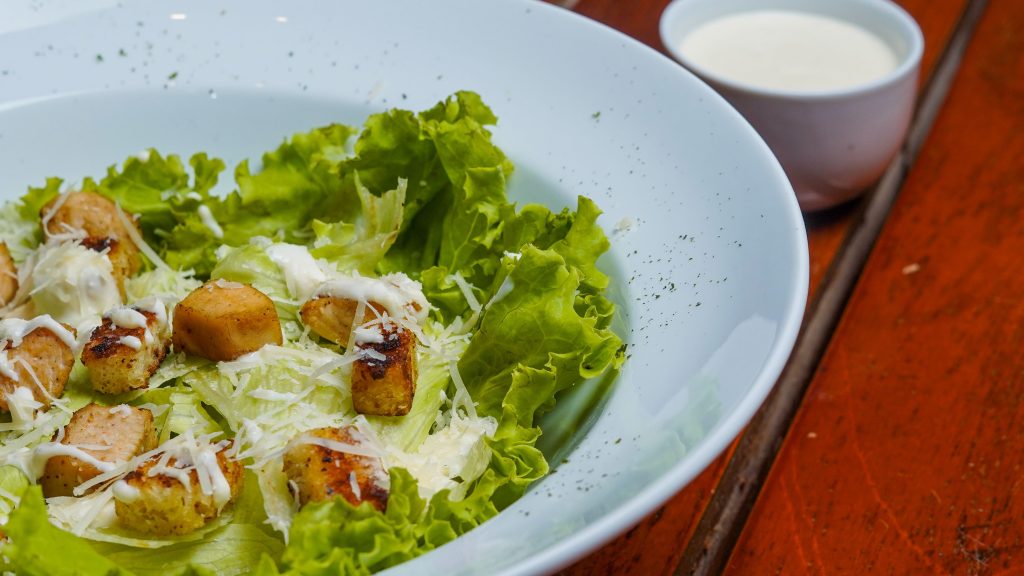
Bagged croutons are the saddest part of most homemade Caesars. They taste like the bag and shatter into dust rather than crunching. Restaurants make croutons from day-old bread, and so should you. It takes ten minutes and transforms the salad.
Cut or tear bread into rough, bite-sized pieces; irregular shapes give you more crispy edges. Toss with olive oil, salt, and a little garlic, then bake at 375°F for about ten minutes until golden. Torn sourdough or a crusty baguette makes the best texture. Stir once halfway so they brown evenly.
The perfect crouton is crisp outside with a slight chew at the center. That contrast keeps it from turning to gravel under your fork. Make extra, because people eat them off the sheet pan. They keep in an airtight container for several days.
Real Parmesan Makes Restaurant Caesar Salad Better
The green can of grated cheese has no place in a Caesar. Pre-grated shelf cheese is dry, dusty, and coated with anti-caking agents that block melting and clinging. Real Parmigiano-Reggiano tastes nutty, salty, and rich. The difference per salad is maybe a dollar.
Buy a wedge and grate it yourself right before serving. Use the fine side of a grater for the dressing so it dissolves smoothly. For the top, shave wide ribbons with a vegetable peeler like restaurants do. Those shavings look impressive and deliver big bites of cheese.
Add cheese in two stages, in the dressing and on the finished salad. The layered approach means every bite carries parmesan somewhere. Grana Padano works as a slightly cheaper substitute with a similar character. Just never go back to the can.
Bringing Restaurant Caesar Salad Home to Your Kitchen
You now know the whole playbook: fresh dressing with anchovies, cold crisp romaine, real croutons, and real parmesan. None of it is difficult, and all of it together costs less than one restaurant salad. The final piece is assembly, and it is where restaurants show their last bit of craft. Toss with intention and serve immediately. Here is how I finish the job at home.
Tossing Technique for Restaurant Caesar Salad at Home
Restaurants toss Caesar salad in a big bowl, and the bowl size matters. Leaves need room to tumble so every surface gets coated. Cramped bowls give you drenched leaves on the bottom and dry ones on top.
Start with less dressing than you think you need. Toss with your hands or two large spoons, then taste a leaf. Add more only if the leaf needs it; the lettuce should glisten, not drip.
Add croutons at the very end, after the leaves are dressed. A brief final toss coats them lightly while keeping the crunch. Croutons that swim in dressing turn soggy in minutes.
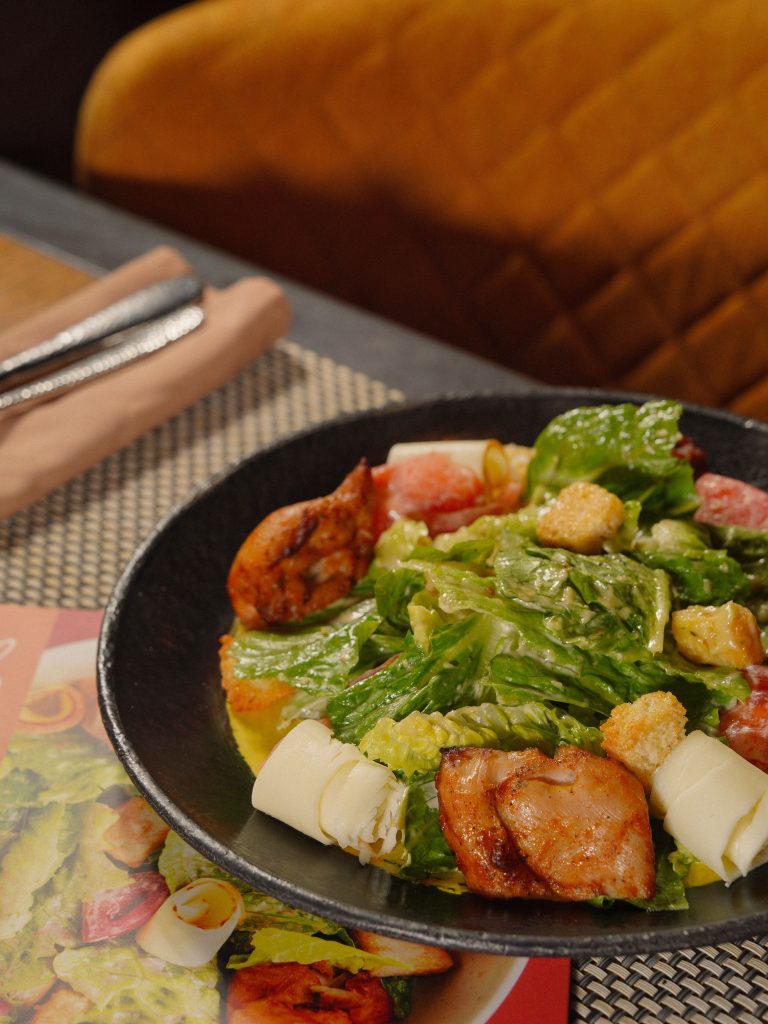
Serving Timing for Restaurant Caesar Salad at Home
Caesar salad has a short window at its peak. Dressed romaine starts softening within fifteen minutes. Assemble at the last possible moment before sitting down.
Everything before that can be done ahead, which is the real secret to easy hosting. Dressing keeps in the fridge for four or five days, croutons hold for several, and washed romaine stays crisp for two. The salad becomes a two-minute job at dinnertime.
Chilled plates or a chilled bowl buy extra crispness on hot July nights. Ten minutes in the freezer is all a plate needs. It is a small touch that guests notice without knowing why.
Turning Restaurant Caesar Salad Into a Full Summer Meal
A great Caesar becomes dinner with one grilled protein on top. Sliced grilled chicken is classic and perfect for summer; click here for my juicy grilled chicken method. Grilled shrimp cooks even faster and dresses the salad up.
Steak Caesar deserves more attention than it gets. Slices of rested, medium-rare steak against cold crisp romaine make a stunning contrast. It feels like a steakhouse meal for a fraction of the price.
Serve it alongside anything off the summer grill, too. A big Caesar feeds a crowd next to burgers or ribs. Once you master this version, the restaurant one loses its mystery.