How to Fix a Sticky Cast Iron Skillet for Good
A sticky cast iron skillet is the most common complaint I hear from home cooks, and it is also the most fixable. That tacky, gummy film on the surface is not rust, damage, or ruined seasoning. It is almost always excess oil that never fully hardened. I fought sticky skillets for years before I understood what was actually happening on the metal. The fix takes one afternoon, and the prevention takes thirty seconds per use. Let me walk you through both so your pan stays slick for good.
Why Your Cast Iron Skillet Is Sticky in the First Place
Sticky cast iron comes from one root cause: oil that sat on the pan without polymerizing. Seasoning is not an oil coating; it is oil transformed by heat into a hard, plastic-like layer bonded to the iron. When oil stays soft, it turns gummy, grabs food, and collects dust. Understanding this changes how you treat the pan forever. Here are the three habits that create the problem.
Too Much Oil Makes a Cast Iron Skillet Sticky
The number one culprit is over-oiling during seasoning or storage. A thick layer of oil cannot fully harden in the oven; the surface sets while the oil underneath stays soft and tacky. That trapped layer is the stickiness you feel. More oil never means more seasoning, only more gum.
Proper seasoning uses an almost invisible amount of oil. Wipe the pan with an oiled cloth, then wipe it again with a dry one like you are trying to remove every trace. What remains is exactly enough. The pan should look barely damp, never shiny or slick.
Storage oil causes the same trouble in slow motion. A generous glug of oil before the pan goes in the cabinet oxidizes over weeks into sticky varnish. A whisper-thin wipe protects the iron just as well. Thin is the entire secret of cast iron care.
Low Heat Makes a Cast Iron Skillet Sticky
Oil needs real heat to polymerize into hard seasoning. Seasoning a pan at 300°F leaves the oil half-transformed, soft, and gummy no matter how thin you applied it. Most oils need 450°F to 500°F to fully harden. An underheated seasoning layer feels sticky the moment it cools.
Time matters along with temperature. The pan needs a full hour at that high heat, plus a slow cool-down in the oven. Rushing the process leaves the chemistry unfinished. Set a timer, walk away, and let the oven do its work.
Cooking habits play a role here too. Pans used only for low and slow tasks build up soft oil residue that never gets hot enough to harden. An occasional high-heat sear actually maintains your seasoning. Cast iron likes to work hard.
Leftover Food Residue Makes a Cast Iron Skillet Sticky
Sometimes the sticky layer is not oil at all; it is cooked-on food and sugar residue. Sauces, marinades, and anything sweet leave a film that feels tacky and darkens with each use. Layering fresh oil over that residue seals it in. Now you have gunk laminated into your pan.
This happens because of the myth that cast iron should never be washed. Mild dish soap does not harm polymerized seasoning; that warning dates back to old lye-based soaps. Wash the pan with warm water, a drop of soap, and a brush after cooking. Clean iron takes seasoning; dirty iron takes hostages.
Dry the pan immediately and completely after washing. Set it over a low burner for two minutes until every drop evaporates. Water invites rust, and rust invites a whole different repair job. Wash, dry, wipe with oil, done.
How to Fix a Sticky Cast Iron Skillet Step by Step
Now for the repair, and I promise it is easier than the internet makes it sound. A sticky pan needs the gummy layer removed and a proper thin layer baked on in its place. You do not need to strip the pan to bare metal in most cases. One afternoon and a bottle of neutral oil handle almost every sticky skillet. Follow these three stages in order.
Scrub Away the Sticky Layer on Your Cast Iron Skillet
Start with a hard scrub to remove the gummy surface. Use coarse kosher salt and a little oil as an abrasive paste, or go straight to a chainmail scrubber if you own one. Scrub in circles with real pressure until the tacky feel is gone. Rinse with hot water and assess.
For serious buildup, bring heat into the fight. Place the pan upside down in a 500°F oven for an hour, or run it through a grill’s high heat. The gunk carbonizes into ash you can scrub away easily. Expect some smoke, so run the vent fan.
Stubborn cases respond to a baking soda simmer. Boil a half inch of water with two tablespoons of baking soda in the pan for ten minutes, then scrape with a wooden spatula. The residue lifts like magic. Only a badly damaged pan needs a full strip to bare iron.
Re-Season Your Cast Iron Skillet the Right Way
With the pan clean and bone dry, apply your oil correctly this time. Rub a small amount of neutral oil like canola, grapeseed, or flaxseed over every surface, inside and out, including the handle. Then take a clean, dry cloth and wipe it all off. The microscopic film left behind is your seasoning layer.
Bake the pan upside down at 475°F for one hour. Upside down placement stops oil from pooling in the cooking surface. Put foil or a sheet pan on the rack below to catch any drips. Let the pan cool completely in the turned-off oven.
Repeat the oil, wipe, and bake cycle two or three times for a fresh foundation. Each thin layer bonds to the last, building slick, dark armor. Three thin coats beat one thick coat every single time. The pan should look satin black, never glossy or wet.
Test and Break In Your Fixed Cast Iron Skillet
Prove the fix with a simple fry test. Heat the pan over medium for five minutes, add a little oil, and fry an egg. A properly seasoned pan releases the egg with a gentle nudge. If it grabs slightly, do not panic; young seasoning improves with use.
Spend the first few weeks cooking fatty, friendly foods. Bacon, sausage, fried potatoes, and seared chicken thighs all deposit flavor and reinforce the surface. Save acidic tomato sauces and delicate fish for later. New seasoning wants easy wins first.
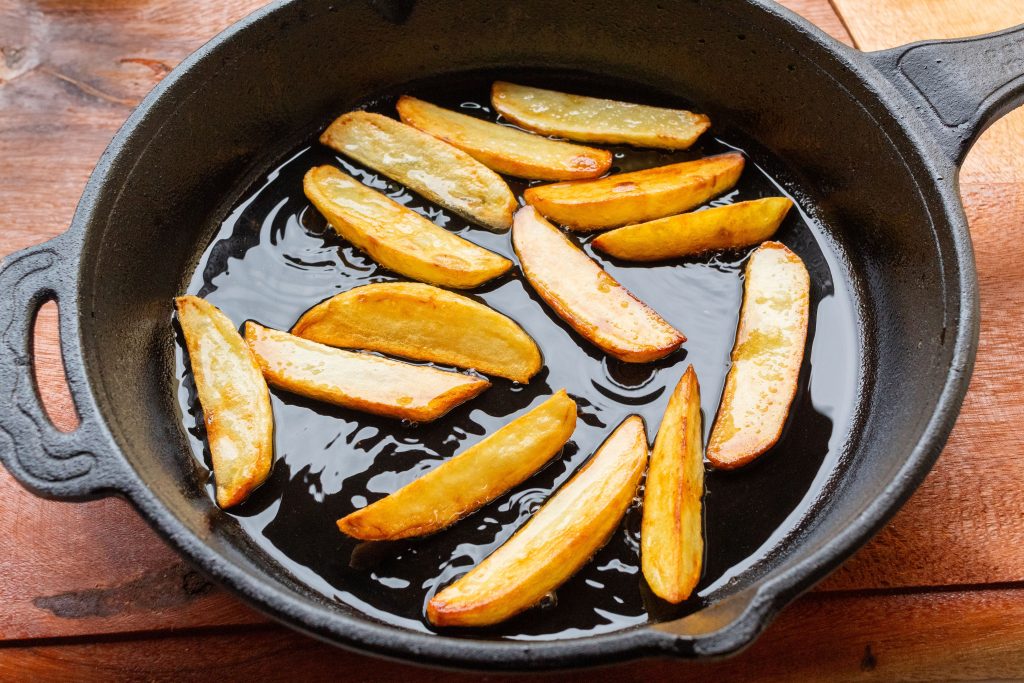
After each cook, do the thirty-second ritual. Wash gently, dry over low heat, and wipe on a barely-there coat of oil. That tiny habit is the entire maintenance plan. If you want a first recipe to break it in, click here for my crispy cast iron smashed potatoes recipe.
Keeping Your Cast Iron Skillet Slick for Good
The repair only sticks, so to speak, if your daily habits change with it. Cast iron rewards routine more than any other pan in the kitchen. The good news is the routine takes less time than loading a dishwasher. Here is how I keep every skillet in my house smooth through decades of use.
Daily Habits That Prevent a Sticky Cast Iron Skillet
Preheat the pan before the food goes in, every time. A properly hot pan releases food and keeps seasoning hard. Cold starts cause sticking and teach bad lessons about a good pan.
Use enough cooking fat during regular meals. A tablespoon of oil while frying maintains the surface naturally. Everyday cooking is quiet, continuous re-seasoning.
Skip the cooking spray forever. Aerosol sprays contain lecithin that builds a sticky lacquer no scrubbing easily removes. Pour real oil from a bottle instead.
Storage Tips That Prevent a Sticky Cast Iron Skillet
Store the pan bone dry with the thinnest possible oil wipe. Slide a paper towel inside the pan to absorb moisture and protect the surface. Skip the tight lid, since trapped humidity breeds rust.
Keep cast iron out of the dish rack and off wet counters. Air drying leaves water sitting on iron far too long. Two minutes over a burner beats an overnight drip dry.
Stack pans with a towel or paper plate between them. Metal on metal scratches young seasoning. Small padding preserves years of built-up slickness.
Cooking Choices That Prevent a Sticky Cast Iron Skillet
Let the pan work through a full rotation of foods each week. Searing, frying, and baking at varied heats keeps seasoning hard and even. Cornbread in a hot skillet is maintenance disguised as dinner; click here for my brown butter skillet cornbread recipe.
Go easy on wine, vinegar, and tomato in a newly fixed pan. Acid softens fresh seasoning before it fully matures. After a month of regular use, the surface handles anything.
Trust the pan to tell you what it needs. Slick and dark means carry on; dull or tacky means one quick oil-and-bake refresh. Read the surface and it will outlive us all.