10 Kitchen Tools Every Home Cook Should Own
10 Kitchen Tools Every Home Cook Should Own
When I first started taking cooking seriously, I did what I think a lot of us do: I bought stuff. Gadgets, single-use contraptions, a drawer full of things that promised to change my life and mostly just collected crumbs. The avocado slicer. The strawberry huller. The garlic gadget that was somehow harder to clean than just using a knife.
Here’s what I eventually learned, and what I promised you back in my post on the 10 Common Cooking Mistakes: cooking well isn’t about owning a mountain of equipment. It’s about owning a few genuinely good tools and knowing how to use them. A well-equipped kitchen is a surprisingly short list. So let me save you the money I wasted and walk you through the ten tools that actually earn their place, plus a few honorable mentions worth having.
1. A sharp chef’s knife
If you buy one thing from this entire list, make it this. A good chef’s knife is the single most-used tool in any kitchen, and a sharp one transforms cooking from a chore into something that actually feels good. It handles the vast majority of your chopping, slicing, and dicing, and it does the work of a whole block of specialty knives you don’t need.
And please, keep it sharp. A dull knife is not only frustrating, it’s genuinely more dangerous, because it slips instead of biting into the food and forces you to push harder. You don’t need to spend a fortune here. A mid-range 8-inch chef’s knife that feels comfortable in your hand will outperform an expensive one that doesn’t. Hold a few before you buy if you can.
2. A sturdy cutting board (ideally two)
Your beautiful new knife needs a worthy partner, and it needs a real surface to work on. Skip the tiny flimsy boards and get something large enough to actually work on, with room for your pile of chopped onion and the vegetables still waiting their turn. A big board makes prep calmer and safer.
I’d suggest owning two: one for raw meat and seafood, and one for produce and everything else. Keeping those worlds separate is the simplest way to avoid cross-contamination in your kitchen, and it means you’re not stopping to scrub mid-recipe. Wood or plastic both work; just make sure it’s heavy enough to stay put.
3. A cast iron skillet
Nothing beats cast iron for getting that deep, golden, restaurant-quality sear we all want. It holds heat like nothing else, which is exactly what you need to build a proper crust on a chicken thigh or a steak. It goes from stovetop to oven without a second thought, and once it’s seasoned, it becomes wonderfully nonstick and lasts literally for generations.
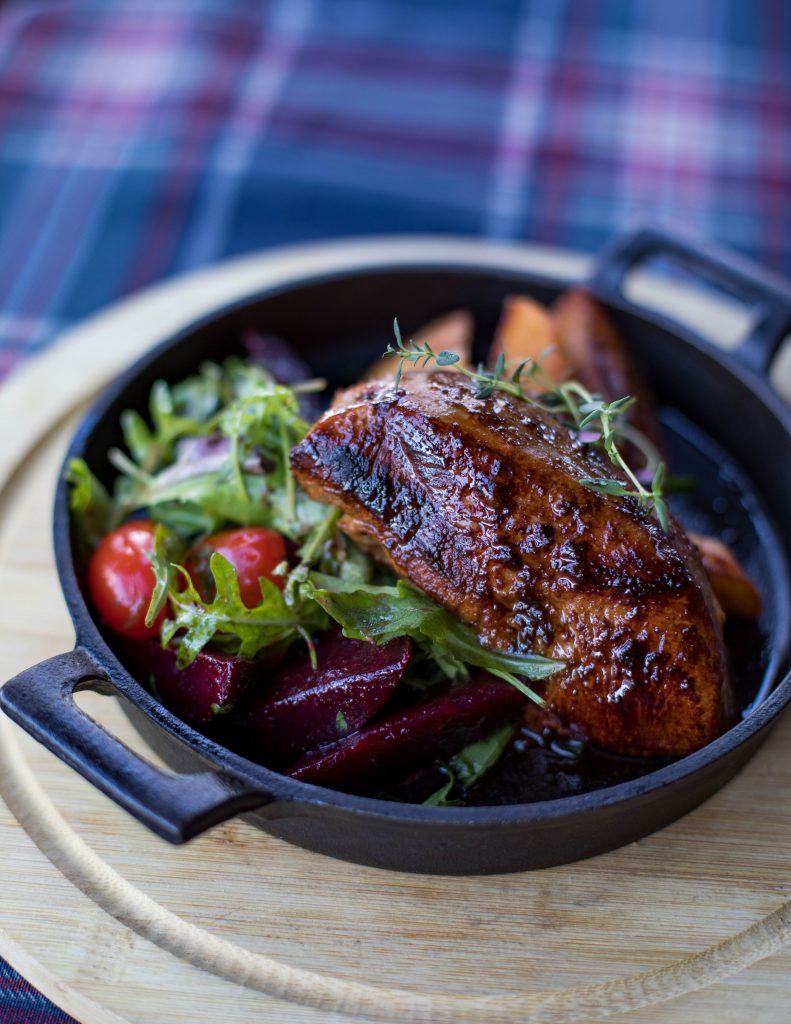
This is the pan I reach for when I want a serious sear, like the crust on a [link to your Blackened Salmon BLT], where that blackened spice coating needs a screaming-hot surface to caramelize properly. Treat it right (dry it well, give it a light coat of oil) and it will outlive every nonstick pan you’ll ever buy.
4. A large stainless steel skillet
Cast iron is a hero, but you want a good stainless steel skillet too, and a big one. Stainless is your everyday all-rounder: it heats evenly, handles acidic ingredients like tomatoes and wine that cast iron doesn’t love, and those browned bits it leaves behind are the foundation of incredible pan sauces.
Look for a heavy-bottomed pan rather than a thin, cheap one that warps and scorches. A pan with some real weight to it distributes heat evenly and won’t develop hot spots, which means fewer burnt patches and more even cooking across the board.
5. A Dutch oven
A heavy Dutch oven is the workhorse behind so much cozy, comforting food. It’s built for low and slow: braises, stews, soups, chili, and pot roasts that turn tough, cheap cuts of meat into something tender and unforgettable. The heavy lid traps moisture and the thick walls hold steady, gentle heat for hours.
It’s also endlessly versatile. You can sear on the stovetop, then move the whole thing into the oven to braise, all in one pot. If you love comfort food the way I do, this is the pot that makes the best of it possible. It’s a bigger investment than most tools here, but a good one will genuinely last a lifetime.
6. A rimmed sheet pan
The humble sheet pan might be the most underrated tool in the kitchen. It’s the key to perfectly roasted vegetables, easy sheet-pan dinners, and yes, crispy potatoes with beautifully caramelized edges. The rim keeps everything from sliding off, and the flat, open surface gives food the room it needs to brown instead of steam.
That last part is the whole trick, and it ties right back to one of the biggest cooking mistakes there is: crowding. Spread your food out in a single layer with space around each piece and you get crispy. Pile it up and you get soggy. It’s exactly what you want for the roasted potatoes in a [link to your Maple Dijon Glazed Salmon with Crispy Potatoes]. Buy two while you’re at it, because you’ll always want more roasting space than you think.
7. An instant-read thermometer
I mention this in almost everything I write, and I’m not going to stop, because it has saved more of my dinners than any other tool I own. So much anxiety in home cooking comes down to one question: is it done? A good instant-read thermometer answers it in two seconds and removes the guesswork entirely.
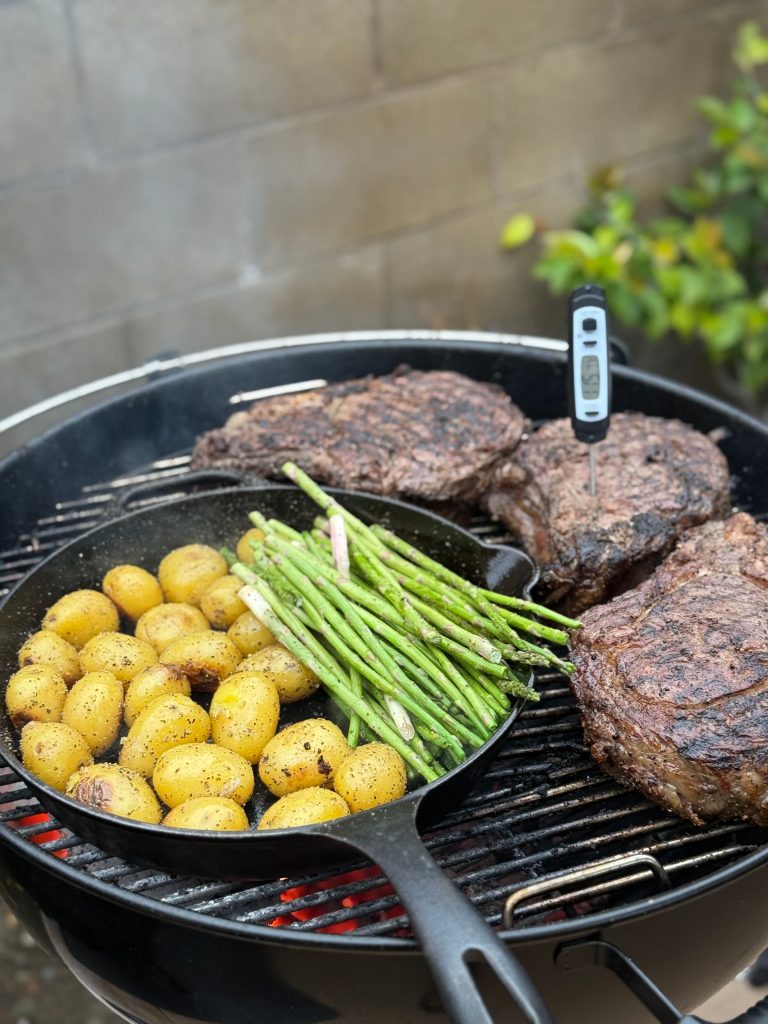
No more slicing into a chicken breast to check (and letting all the juices run out), no more crossing your fingers and hoping. Just cook to the right internal temperature and pull it off the heat with confidence. For inexpensive pieces of gear, this one punches so far above its weight it’s almost unfair. It’s especially handy for uneven cuts, like the chicken on a [link to your Grilled Pineapple Chicken Skewers], where one piece is always thicker than the next.
8. A pair of good tongs
Think of tongs as a heatproof extension of your own hand. Once you have a good pair, you’ll be amazed how often you reach for them: flipping chicken, tossing vegetables in a hot pan, pulling pasta from boiling water, plating a finished dish with precision. They give you control and reach that a fork or spatula simply can’t.
Look for a spring-loaded pair with silicone tips so you don’t scratch your nice pans. This is a cheap tool that instantly makes you feel more capable at the stove, and it’s one of those things you never realize you were missing until you have it.
9. A fish spatula
Don’t let the name fool you, because this thin, flexible, slotted spatula is useful for far more than fish. Its thin front edge slides under delicate foods that a thick, clunky spatula would tear apart. Eggs, pancakes, and yes, a beautifully seared fish fillet all flip cleanly with it.
The flexibility is the magic. It lets you get right under the food and lift without breaking it, which matters enormously with something as fragile as a piece of salmon. If you cook seafood even occasionally, this inexpensive tool will quickly become a favorite.
10. A microplane or fine grater
This little rasp-style grater does a huge amount of flavor work for its size. It turns a clove of garlic into a smooth paste that melts into a sauce, grates fresh Parmesan into an airy, meltable snow, and zests a lemon in seconds to add that bright citrus perfume to a dish.
Fresh-grated always beats pre-packaged, and this is the tool that makes it effortless. When a dish leans on finely grated garlic and a shower of good Parmesan, like a [link to your Cajun Shrimp Alfredo Stuffed Shells], a microplane is what gets you there. It’s small, cheap, and quietly transforms how your food tastes.
A few honorable mentions
Once you’ve got the essentials above, these round out a fully functional kitchen: a set of nesting mixing bowls, a wooden spoon and a heatproof silicone spatula, a solid colander for draining, and basic measuring cups and spoons. If you want to get serious about baking or consistent results, a small digital kitchen scale is worth adding, since weighing ingredients is far more accurate than scooping.
The bottom line
Notice what’s not on this list: no single-use gadgets, no gimmicks, nothing that only does one tiny job. Every tool here is a versatile workhorse that earns its space by doing many things well. That’s the whole philosophy. A great kitchen isn’t the one with the most stuff crammed into its drawers. It’s the one where every tool you own is one you actually reach for.
If you’re building a kitchen from scratch, don’t feel like you need all of this at once. Start with a good knife, a cutting board, one great pan, and a thermometer, then add the rest as you go. Buy the best versions you can comfortably afford, take care of them, and they’ll take care of you for years.