Why Your Biscuits Come Out Flat and How to Get Them Tall and Flaky
Flat biscuits break my heart every single time. You follow the recipe, slide the pan into a hot oven, and out come sad little hockey pucks instead of towering golden beauties. Summer makes it worse; a warm July kitchen works against you at every step. The good news is that flat biscuits almost always trace back to a few fixable mistakes. Once you understand the causes, tall and flaky biscuits become the rule instead of the exception. Let me show you exactly what is going wrong and how to fix it for good.
Why Biscuits Come Out Flat: Common Baking Mistakes
Flat biscuits are rarely a mystery once you know where to look. In my kitchen, nearly every failed batch comes down to temperature, leavening, or handling. Butter that got too warm, baking powder that lost its punch, or dough that was worked to death will sabotage even the best recipe. Summer heat accelerates the first problem dramatically, which is why so many bakers struggle in July. Diagnose the mistake first, and the fix becomes obvious.
Warm Butter Causes Flat Biscuits in Summer Kitchens
Cold butter is the single most important ingredient in tall biscuits, and warm butter is the fastest way to ruin them. Solid pieces of butter create steam pockets in the oven, and steam is what pushes your biscuits upward. If the butter softens before baking, it smears into the flour instead of staying in distinct pieces. Smeared butter means no steam pockets, and no steam pockets means flat, dense biscuits. A summer kitchen sitting at 78 degrees can soften butter in minutes.
I keep my butter in the freezer for at least thirty minutes before I even think about mixing. Grating frozen butter on a box grater is my favorite trick because it creates perfect shreds without hand contact. Your hands run near 98 degrees, which is more than warm enough to melt butter fast. Work quickly, use a pastry cutter instead of your palms, and get that dough back into the cold. On the hottest days, I chill the mixing bowl and the flour too.
Watch the dough for warning signs as you work. Butter that looks glossy or greasy has already started to soften; the dough will feel sticky instead of shaggy. When that happens, pop the whole bowl into the refrigerator for fifteen minutes before continuing. I also chill my cut biscuits on the sheet pan for ten minutes before baking, and this one habit alone added noticeable height. Cold dough hitting a hot oven creates the dramatic rise we are chasing.
Old Baking Powder Makes Biscuits Come Out Flat
Baking powder is the engine of biscuit rise, and it quietly dies in your pantry. Most baking powder loses significant potency six months to a year after opening, even before the printed date. Humidity speeds that decline, so a canister that lived through a muggy summer may already be weak. Weak leavening means the chemical reaction fizzles, and your biscuits never get the lift they need. I learned this the hard way after three flat batches from a recipe I had made dozens of times.
Testing your baking powder takes ten seconds and saves enormous frustration. Drop a teaspoon into a half cup of hot water and watch closely. Fresh baking powder bubbles vigorously right away, like a tiny science experiment. A weak fizz or no reaction means it is time for a new canister. I write the opening date on mine with a marker so I never have to guess.
Measuring matters just as much as freshness. Too little baking powder produces flat biscuits; too much creates a bitter, metallic taste and a rise that collapses. Most classic recipes call for about one tablespoon of baking powder per two cups of flour, and I stick close to that ratio. Spoon and level your flour instead of scooping, because compacted flour throws the whole balance off. Accurate measuring plus fresh leavening gives every batch a fighting chance.
How to Get Tall and Flaky Biscuits Every Time
Once the common mistakes are handled, technique separates good biscuits from bakery quality ones. Tall and flaky biscuits come from building layers, cutting cleanly, and baking hot. None of these skills require fancy equipment or professional training. They require attention and a little repetition, which is exactly what home baking is all about. Two techniques transformed my biscuits from decent to showstopping.
Lamination Technique for Tall and Flaky Biscuits
Lamination sounds intimidating, but it is simply folding dough to create stacked layers of butter and flour. Those layers separate in the oven as the butter steams, producing that gorgeous pull apart flakiness. After mixing, I pat the dough into a rough rectangle about one inch thick. Then I fold it into thirds like a letter, rotate it, pat it out again, and repeat. Three or four folds is the sweet spot for biscuits.
The trick is folding with a light touch so you build layers without developing gluten. Gluten forms when flour and water get worked together, and too much of it makes biscuits tough and squat. I press gently with my palms rather than forcing a rolling pin through the dough. If the dough starts fighting back or springing away, it needs a rest in the refrigerator. Ten minutes of chilling relaxes the gluten and firms the butter back up.
You will actually see layers on the sides of the dough after a few folds, which is deeply satisfying. Keep the surface lightly floured, but avoid heaps of extra flour that dry the dough out. Buttermilk doughs stay a little tacky, and that moisture converts to steam and height in the oven. Trust the shagginess; rough dough bakes taller than dough smoothed into submission. Once you master folding, click here for my step by step buttermilk biscuit recipe to put it into practice.
Cutting and Baking Tips for Tall and Flaky Biscuits
How you cut biscuits directly affects how high they rise. Press your cutter straight down and pull it straight up without twisting. Twisting seals the edges of the dough, and sealed edges physically cannot rise. I dip my cutter in flour between cuts to keep things clean and sharp. A sharp cutter matters too, since a dull rim compresses the layers you worked to build.
Pan placement is a sneaky factor most home bakers never consider. I arrange my biscuits so they are just barely touching on the baking sheet. Neighbors support each other as they rise, forcing expansion upward instead of outward. Biscuits spaced far apart tend to slump and spread. A cast iron skillet works beautifully because the sides hug the outer biscuits while the iron delivers fierce bottom heat.
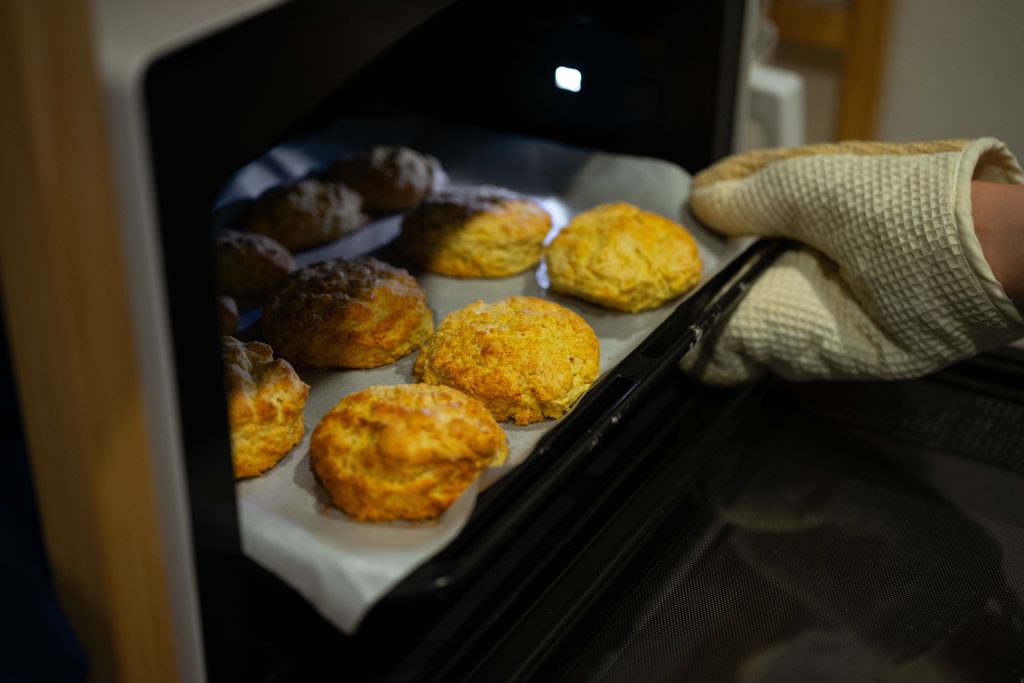
Bake hot, and I mean genuinely hot, at 425 to 450 degrees. High heat flashes the butter into steam quickly, inflating the layers before the structure sets. An oven thermometer is worth its weight in gold, since many home ovens run 25 degrees cool. Brush the tops with melted butter or buttermilk for deep golden color. Pull them when the tops are bronzed and the sides look set, usually twelve to fifteen minutes.
Bringing Tall and Flaky Biscuits Together in Your Kitchen
You now have every tool you need to banish flat biscuits forever. Cold butter, fresh baking powder, gentle folds, a clean cut, and a screaming hot oven work together as a system. Miss one and the others can only partially compensate, but nail all five and the results feel like magic. Biscuit skill compounds with every batch, even through the heat of summer. Here is how I build that skill and troubleshoot along the way.
Practice Routine for Tall and Flaky Biscuits
Bake biscuits once a week for a month and watch what happens. Repetition teaches your hands what proper dough feels like faster than any written description. Keep the recipe identical each time so technique is the only variable. By week four, your biscuits will be noticeably taller and flakier.
Take notes after every single batch. Jot down the kitchen temperature, how the dough felt, and how high the biscuits rose. Patterns emerge quickly, and those patterns tell you exactly what to adjust. My stained notebook made me a better baker than any cookbook did.
Bake small batches so practice never feels wasteful. A half recipe teaches you everything a full recipe does. Extra raw biscuits freeze beautifully for busy mornings. Need something to serve alongside them? Click here for my easy sausage gravy recipe that comes together in fifteen minutes.

Troubleshooting Checklist for Tall and Flaky Biscuits
Run through a quick checklist when a batch disappoints. Flat and greasy points to warm butter; flat and dense usually means dead baking powder. Tough and squat biscuits signal overworked dough and too much gluten. Match the symptom to the cause and the fix becomes obvious.
Lopsided biscuits usually come from twisting the cutter or an uneven oven. Rotate your pan halfway through baking if one side browns faster. Check that your cutter comes straight up out of the dough. Small mechanical corrections deliver big visual improvements.
Pale tops mean your oven runs cool or the biscuits need a butter brush. Gummy centers mean they came out too early, so add two more minutes next time. Every flaw has a fix, and every fix is within your reach. Preheat that oven, grab the frozen butter, and go bake something tall.