How to Pick a Ripe Watermelon Without Cutting Into It
Every July I watch shoppers at the market lift a watermelon, stare at it, shrug, and drop it in the cart on pure hope. You do not need luck to pick a ripe watermelon; you need a handful of reliable signals that farmers have used for generations. A watermelon stops ripening the moment it leaves the vine, so the melon you choose is exactly the melon you will eat. That makes your two minutes at the produce bin the most important step of the whole process. I am going to walk you through the visual checks, the sound test, and the weight test I use every single summer. Master these and you will never haul home a pale, mealy disappointment again.
How to Pick a Ripe Watermelon by Looking at It
Your eyes can tell you most of what you need to know before you ever touch the melon. A ripe watermelon carries visible proof of a long, sunny life in the field, and an underripe one hides almost nothing. I always start with a slow visual scan of the whole fruit, top to bottom. Two features matter most here: the field spot and the condition of the rind. Learn to read both and you are already ahead of ninety percent of shoppers.
Checking the Field Spot to Pick a Ripe Watermelon
The field spot is the patch where the watermelon rested on the ground while it grew. Sunlight never reached that spot, so its color reveals how long the melon sat on the vine soaking up sugar. On a ripe watermelon, the field spot looks creamy yellow, buttery, or even slightly orange. A white or pale green spot tells me the melon was picked early, and early picking means bland flesh.
Size of the spot matters too, and bigger is generally better. A large, deep yellow patch means the melon had weeks of undisturbed ripening time in one position. I once compared two melons side by side at a farm stand in Texas, one with a golden spot and one with a ghostly white patch. The golden one tasted like candy; the pale one tasted like wet cucumber. That single comparison converted me into a field spot loyalist for life.
Do not confuse the field spot with sunburn or general discoloration. The field spot sits on one distinct area, usually a rounded oval, with a clear edge where it meets the green rind. Blotchy pale streaks scattered across the melon are a different story and usually signal uneven growing conditions. Focus on that one contact patch and trust its color. Creamy yellow means yes; stark white means keep looking.
Reading the Rind to Pick a Ripe Watermelon Without Cutting It
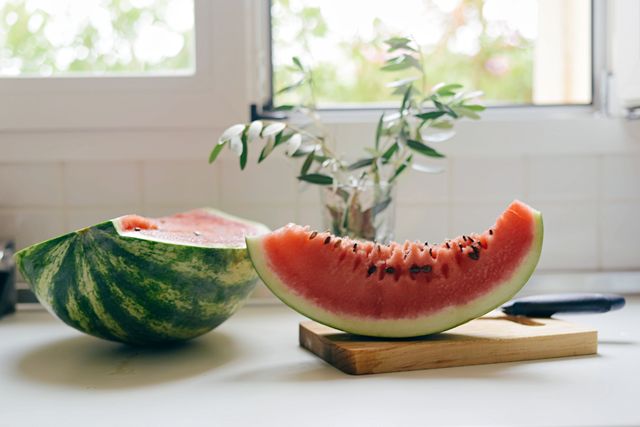
A ripe watermelon should look dull, not glossy. Shine on the rind signals immaturity, because the surface loses its sheen as sugars develop inside. I know a matte melon looks less appealing under grocery store lights, but that dusty finish is exactly what you want. Give the whole surface a once over and pass on anything that gleams like a bowling ball.
Next, hunt for webbing, which looks like rough brown lines or corky scars crisscrossing the rind. Those marks form where bees pollinated the flower, and heavier pollination correlates with sweeter fruit. Some growers call these sugar spots, and I get genuinely excited when I find a melon covered in them. Small dried sap beads that look like dark dots can also indicate sugar seeping out. Cosmetic perfection is overrated; scarred melons often win the taste test.
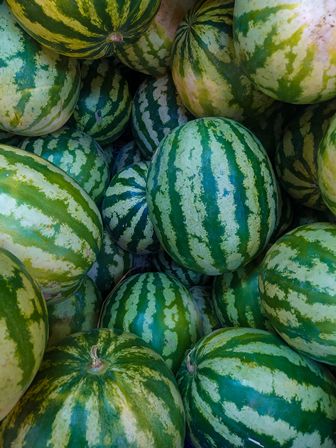
Finally, check the color contrast on striped varieties. You want a strong difference between the dark green stripes and the lighter bands between them. Faded, washed out striping often points to a melon that ripened poorly or sat in storage too long. While you are inspecting, glance at the stem end if a stem remains. A brown, dried tendril means the melon matured fully; a green stem means someone pulled it too soon. Once you get your winner home, pair it with something fresh like this one; click here for my watermelon feta salad recipe with mint.
How to Pick a Ripe Watermelon by Sound and Feel
Looks only tell part of the story, so I always confirm my visual pick with my hands and ears. Sound and weight reveal what is happening inside the melon, where water content and flesh density live. These tests take ten seconds and require zero special skill, just a little practice. Farmers have thumped melons for centuries because the method genuinely works. Here is exactly how I do it and what I listen for.
The Thump Test for Picking a Ripe Watermelon
Hold the watermelon in one hand or steady it in the bin, then give it a firm knock with your knuckles. A ripe melon produces a deep, hollow sound, similar to knocking on a door. That resonance happens because ripe flesh holds a high water content that lets sound waves travel and bounce. Think of it as the melon echoing back at you.
An underripe watermelon answers with a dense, dull thud instead. The immature flesh is too firm and tight to resonate, so the sound dies immediately. An overripe melon goes the other direction and sounds flat or almost muffled, because the flesh inside has started breaking down into mush. You are listening for that middle zone, the confident hollow ring. It sounds tenor, not bass, and definitely not a flat slap.
If you feel unsure, thump three or four melons in a row and compare. Your ear calibrates quickly once you hear the difference back to back, and the contrast becomes obvious within a few tries. I taught my nephew this trick in about ninety seconds at a roadside stand last summer. He now thumps every melon in the store like a tiny percussionist, and his picks have been excellent. Practice on the whole display; nobody will mind.
Weight and Shape Clues for Picking a Ripe Watermelon
Pick up two melons of similar size and compare how heavy each one feels. A ripe watermelon is about ninety two percent water, so it should feel surprisingly heavy for its size. That density is a direct signal of juicy, fully developed flesh. A light melon means low water content, and low water content means dry, cottony texture. Heavy always wins when everything else looks equal.
Shape matters more than most people realize, and uniformity is the goal. Look for a symmetrical melon, either round or oval depending on the variety, without irregular bumps, flat sides, or lumpy bulges. Deformities usually indicate inconsistent watering or pollination problems during growth, and those issues show up as uneven sweetness inside. Also note that rounder melons tend to run sweeter, while elongated ones tend to be more watery. I lean round when I have the choice.
Run your palms over the surface and give the melon a gentle press near the blossom end, opposite the stem. You want firmness everywhere; soft spots signal bruising or early rot beneath the rind. Skip any melon with cracks, gashes, or dents, since damage invites bacteria into all that sugary moisture. Firm, heavy, symmetrical, and hollow sounding is the full winning combination. When you find one that checks every box, grab it without hesitation.
Bringing Your Ripe Watermelon Home: Enjoying Your Pick All Summer
Choosing well is the hard part, and everything after that is pure reward. A great watermelon deserves proper storage and a little serving creativity so none of it goes to waste. I treat every summer melon like a small event in my kitchen, because a truly ripe one only comes around so often. Handle it right and you get days of sweet, cold slices from a single smart purchase. Here is how I protect that investment.
How to Store a Ripe Watermelon After You Pick It
Keep a whole, uncut watermelon on the counter at room temperature for up to a week. Research from the USDA found that watermelon actually maintains more lycopene and beta carotene when stored around room temperature. I set mine in a shaded corner away from the stove and direct sun. Cool and dark is the sweet spot.
Once you cut into the melon, refrigeration becomes mandatory. Wrap cut halves tightly in plastic wrap or press them cut side down onto a plate, then chill them promptly. Cut watermelon stays at its best for about three to four days in the fridge. Store cubes in an airtight container so they do not absorb fridge odors.
Freezing works if you have more melon than mouths. Cube the flesh, freeze the pieces on a sheet pan, then bag them for smoothies and frozen drinks. The texture turns soft after thawing, so skip frozen melon for fresh eating. Blended applications are where those frozen cubes shine; click here for my three ingredient watermelon slushie recipe.
Easy Ways to Serve a Ripe Watermelon All Summer
Cold, plain slices are the classic for good reason, and I never argue with them. A sprinkle of flaky salt intensifies the sweetness in a way that surprises people every time. A squeeze of lime and a dusting of chili powder takes slices in a bright, Mexican inspired direction. Simple upgrades like these cost almost nothing.
Savory preparations deserve a spot in your rotation too. Watermelon pairs beautifully with salty cheeses, briny olives, and peppery greens like arugula. I even throw thick slabs on a hot grill for about two minutes per side, which caramelizes the sugars and adds smoky depth. Grilled watermelon next to barbecue chicken is a genuine summer showstopper.
Do not toss the rind either, because it holds real culinary value. Pickled watermelon rind is a Southern tradition with a sweet, tangy crunch that works on sandwiches and charcuterie boards. If pickling sounds intimidating, click here for my beginner friendly quick pickled watermelon rind recipe. One smart melon can feed you from flesh to rind.